

This is the second of two posts about Ootsa Lake and the extraordinary lengths suppliers go to make the products we use every day.
As a kid, I spent my summers at Rideau Lake in Ontario, three thousand seven hundred kilometres from Ootsa Lake, where Alcan’s dam had flooded the traditional territory of the Cheslatta Carrier Nation.
One sunny August afternoon in 1980, while my father drove the boat, I took one last lick of my popsicle and tossed the stick into the water. He frowned, then made a hard turn, banking the boat and sending me sideways. When we had circled back, close enough to see the stick bobbing on the surface, my father gestured for me to jump in and retrieve it. Another lesson from parents with a very low tolerance for a litterbug, or a jerk.
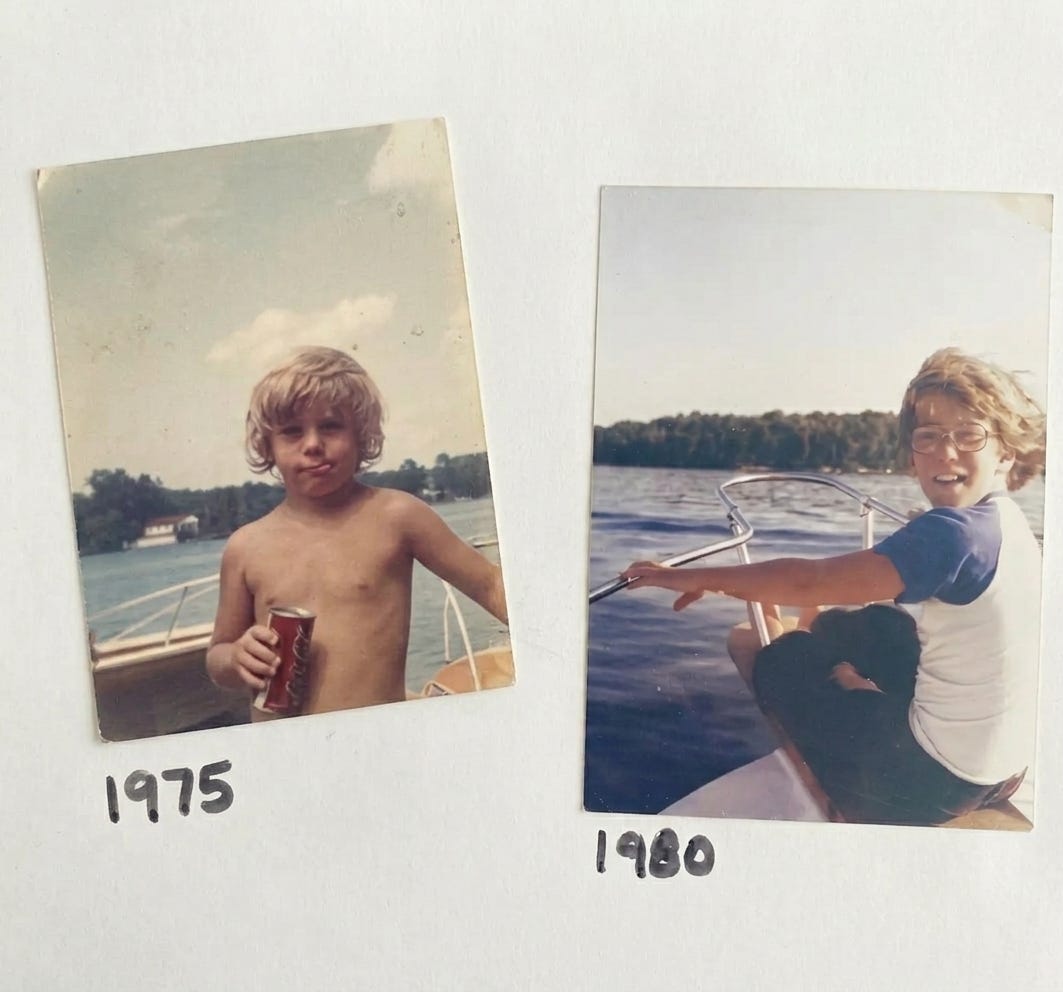
Popsicles from the marina store were a solid choice, but my go-to sugar high for years was a can of Coke. When every drop was gone, I would try to crush the can with one hand. The only person I knew at Rideau Lake who could do it was my cousin Johnny Askwith. To me, he had superhero strength to go along with the character we all admired. He always did the right thing. Always defended the little guy.
That summer, the pop cans changed. The new ones were made of Alcan aluminum, not tin. Now, every day I drank my Coke, then crushed the can with one mighty squeeze, the way Johnny did. And for a second I had his strength too.
The Coke cost forty cents. The aluminum in it was worth a penny or two. In 1980, as a kid who believed in superheroes, I spent about thirty dollars on Coke. And roughly a dollar of that went to Alcan, who used my money to abuse the Cheslatta Carrier Nation, continuing a legacy of cruelty that began in the 1950s and did not end for sixty-seven years.
We are on a mission to break this cycle, to stop spending our money on things that contradict our values. Not just because it feels wrong. It is bigger than that. Supplierism argues that every large-scale social, environmental and economic failure in the world is linked to decent people using their own money to fund bad outcomes that ultimately make their lives more expensive and less safe. Climate change is the most obvious example.
The dollar I sent Alcan that summer may seem small. But it adds up. In July, I wrote about the sheer scale of our purchasing power. Over a lifetime, the average Canadian spends nearly $2.4 million on products and services. Across Canada, the United States and Britain alone, that comes to roughly $965 trillion of purchasing power spent blindly over our lifetimes.
So, yes, it does add up. Those aluminum cans of Coke matter.
Supplierism treats every citizen as a sophisticated buyer who, thanks to the technology now in our pockets, can set their own terms and conditions (T&Cs) with the companies they buy from. Not just to prevent harms, but to use our money as an incentive for innovations that can solve the world’s biggest problems.
In the first post, we looked at the harm Alcan caused at Ootsa Lake. Here I want to imagine the benefits that same company could have created, if only we had used our purchasing power effectively.
So, let’s go back to Ootsa Lake, and take stock of what Alcan engineered there in pursuit of our money. But this time, with no illusions. Just look at what was built, and ask ourselves what else they would be willing to do in pursuit of our money, if we set the terms well.
Can our suppliers reverse climate change? Stop wildfires? End corruption?
Set against the mind-boggling engineering of Alcan in British Columbia between 1950 and 1954, none of those goals looks as impossible as we tend to assume.
The dam at Ootsa Lake
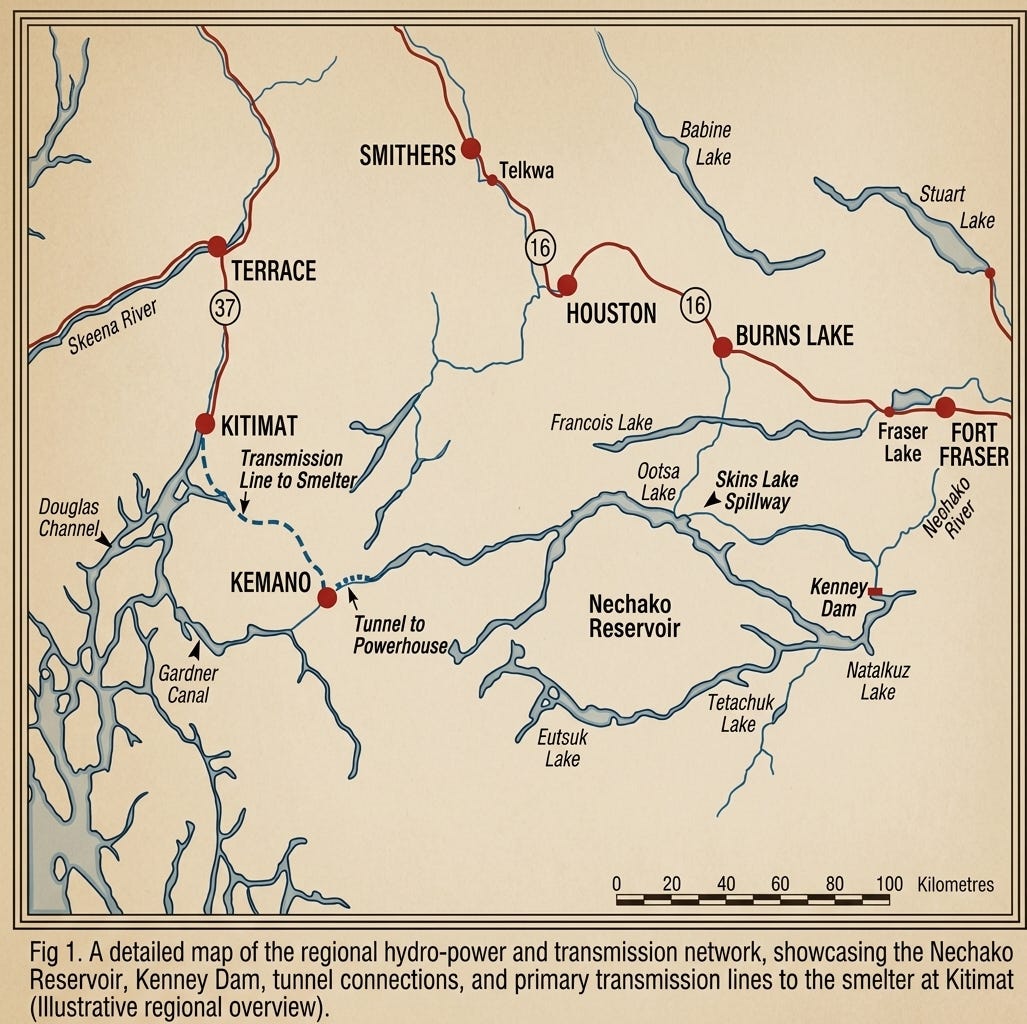
To make the hydro dam, Alcan piled over three million cubic metres of rock and clay across the Nechako Canyon, nearly a hundred metres high and half a kilometre wide at the top. When it was finished it was the largest rockfill dam in the world.
That was the easy part. The real engineering challenge was the river. It flowed the wrong direction. So Alcan turned the river around and sent the water to the west coast.
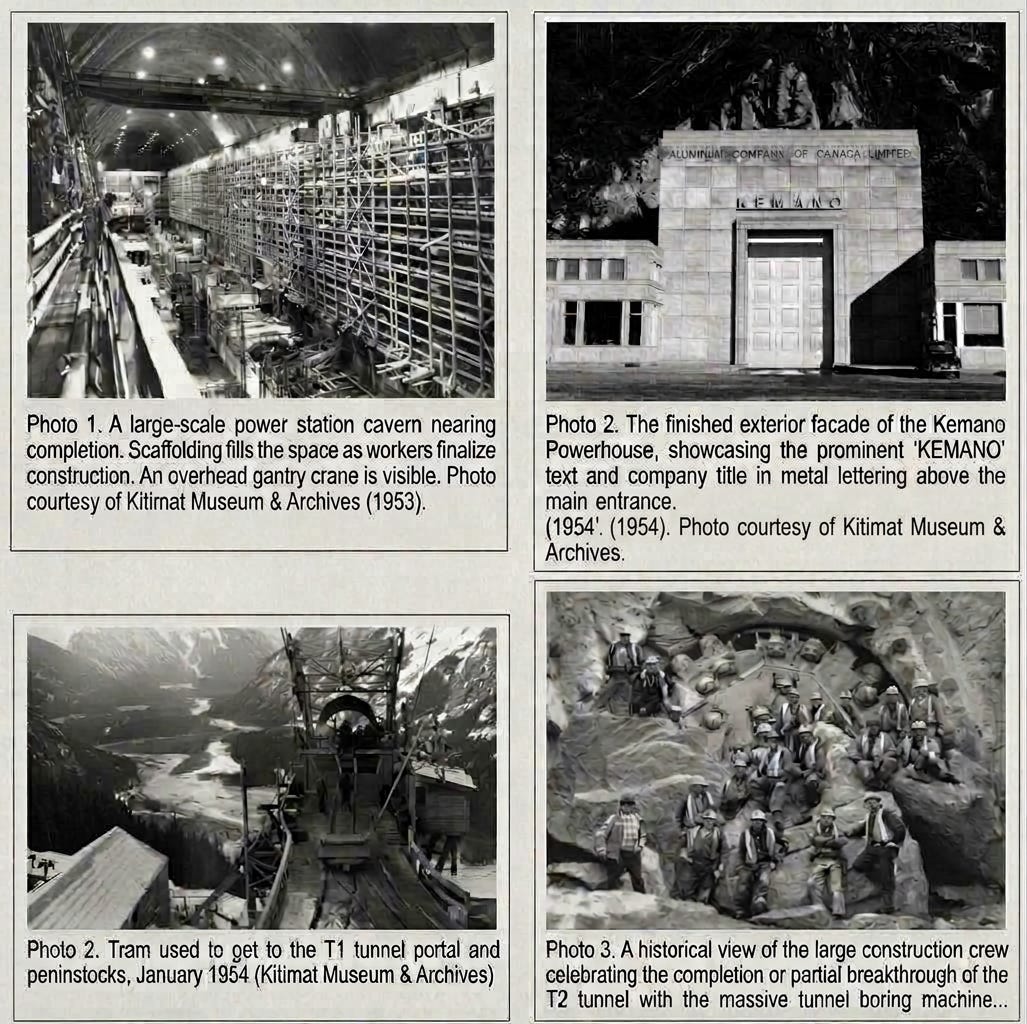
Next, Alcan blasted a tunnel sixteen kilometres long, wide enough to drive a two-lane highway straight through the heart of a mountain, boring through solid granite from two directions. When the headings met deep inside the mountain they were aligned to within a few inches. This was the early 1950s. There was no GPS. Alcan used rudimentary survey instruments, geometry, and nerve. From there, the water dropped almost eight hundred metres, nearly straight down, with enough force to spin the giant hydro turbines.
The power station itself was carved into the base of a mountain near the coast. A cavernous structure that looks like the lair of a James Bond villain, Kemano is inaccessible by road. Everything used to build it was shipped in by boat or helicopter.
Then power transmission lines were strung eighty-two kilometres over some of the most brutal terrain on the planet, fifteen hundred metres above the sea, through a landscape of ice and rock and avalanche, reaching the site chosen for Alcan’s new smelter and deep-water port, both built from scratch.
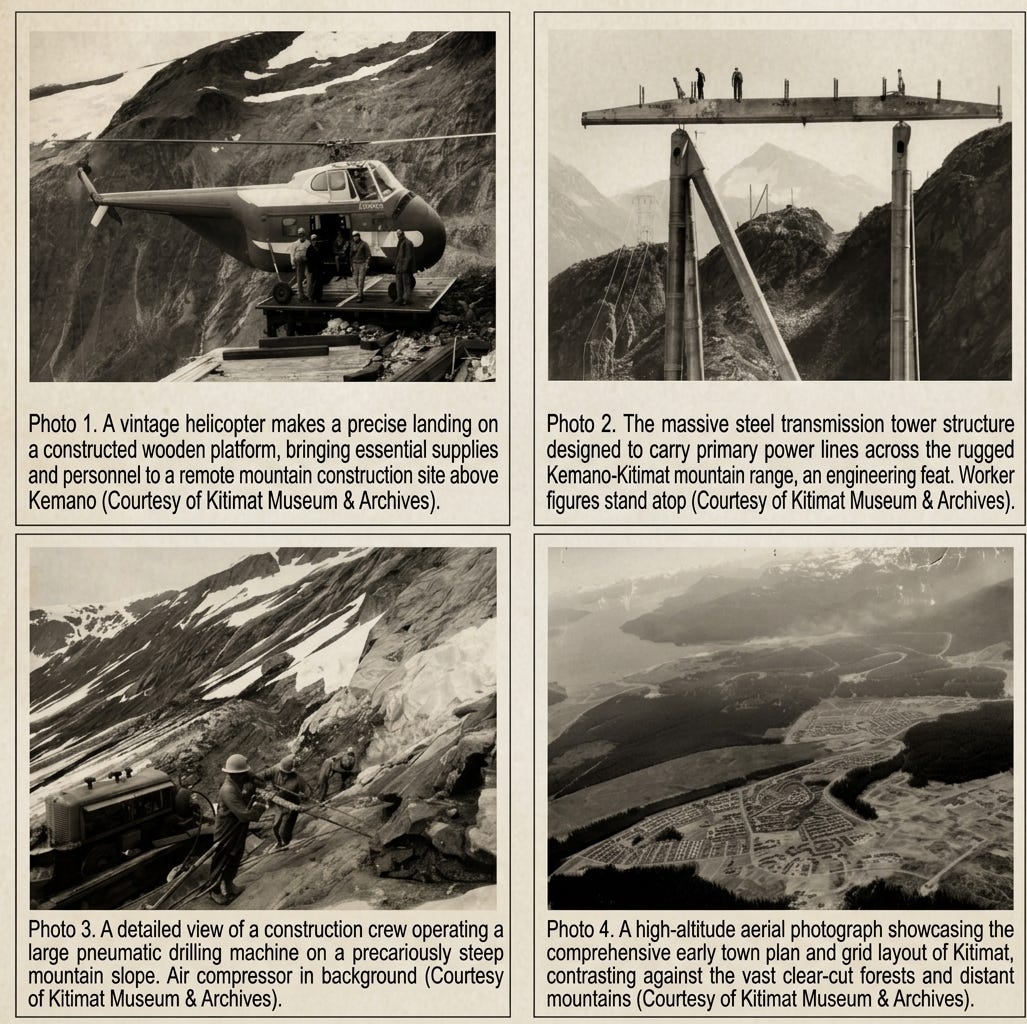
Alcan hired planners from New York to design Kitimat. They built homes, schools, churches, hockey rinks, a hospital, and streets laid out for a population they expected to reach fifty thousand.
The whole supply chain of power and metal and people was built in roughly five years. It was, at the time, the most expensive project ever attempted by private industry, anywhere on earth.
Alcan turned a river backwards. They bored sixteen kilometres through a mountain and built a power plant in a place with no roads, then flung power lines across frozen peaks into a deep-water port, a smelter, and a whole city, all conjured out of a remote inlet to serve a factory that turned Ootsa Lake electricity into aluminum, so that we could have airplanes and foil and a billion drink cans a year, and so I could drink a Coke on a summer day in 1980.
None of this is shared to make you admire Alcan. I’m sharing this because of what it suggests: when our money is valuable enough to a supplier, there is almost nothing they cannot or will not do. And they do it with breathtaking speed and skill. Their ingenuity is real. The capabilities of our suppliers are almost limitless.
The genius of Alcan could easily have preserved the Cheslatta way of life from day one. It was not beyond them. It simply was not demanded by people like me, aged ten; by my father, who hated the idea of fouling a lake with a single popsicle stick; by my cousin Johnny Askwith, who would have stood up for anyone being bullied; or by the millions of ordinary people who spend trillions on their suppliers every year. The capability to solve the world’s problems has always been there. Just the instructions are missing. The ones only we can write as terms and conditions.