

This is the first of two posts about Ootsa Lake and the extraordinary lengths suppliers go to make the products we use every day.
Twenty years ago, Wired Magazine travelled to Ootsa Lake to learn how a company I founded was becoming the world's largest supplier of reclaimed wood. The Wired article, and a link to the company (now owned by Voltalia), are at the end of the post.
Ootsa Lake is in the north-central interior of British Columbia. It is a remote place to work, where groceries and hardware were a five-hour round trip over dirt roads from an off-grid crew camp. Ours was a row of linked trailers behind a steel gate, to keep the grizzlies out at night.
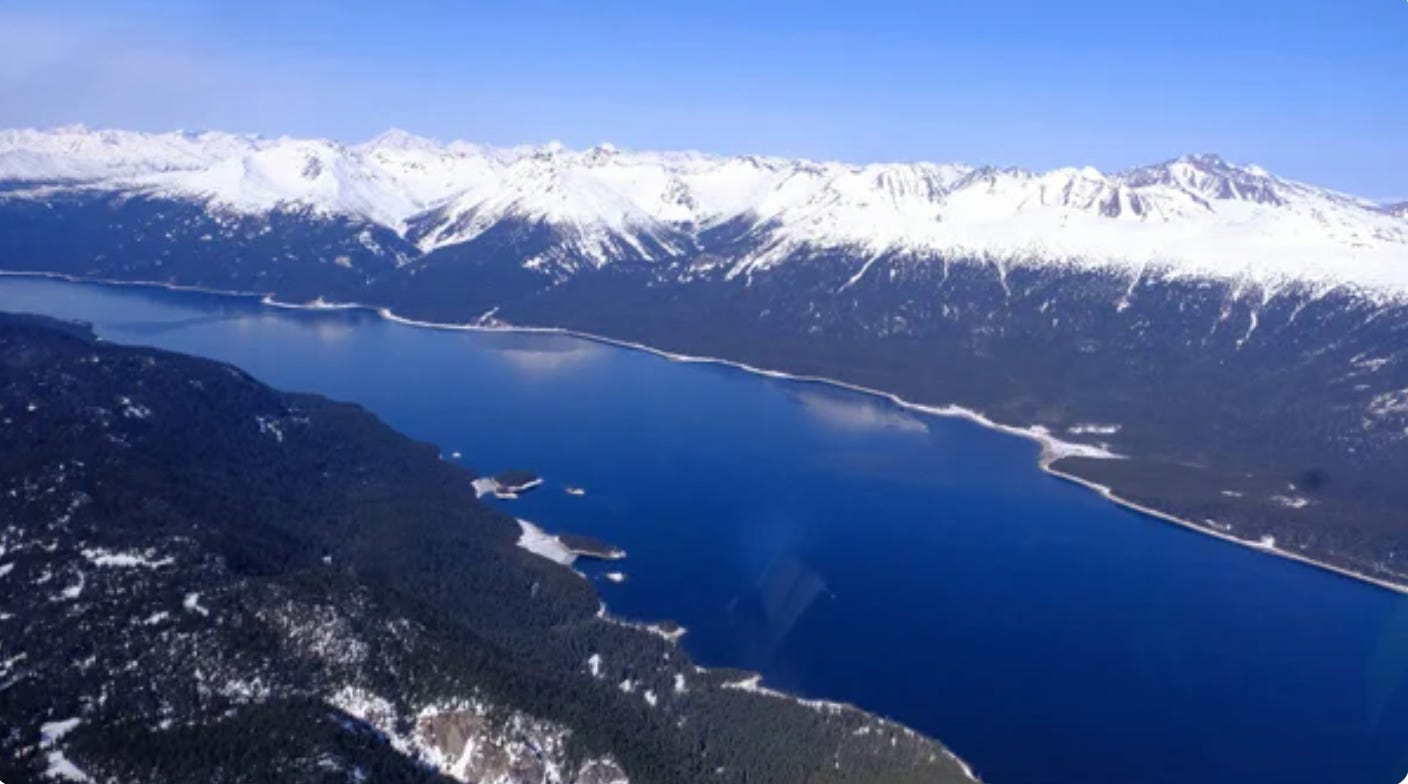
But reclaimed wood is only a small part of Ootsa Lake’s history. The full story is about a much bigger industry, and about the lessons the lake is still surfacing today.
When you stand on a ridge and take it in, Ootsa Lake is immediately deceptive. A fiord-like body of water opens west, stretching two hundred and thirty kilometres across the heart of British Columbia.
The first deception is the absence of human activity. It can appear almost vacant, as if no one was ever here before, or stayed for long if they were. Water, forest and sky pan out, uninterrupted. The lake is calm, surrounded by an evergreen horizon. A deep breath of the cold, fresh air can trick a mind in search of serenity.
The water snakes into the distance toward the west coast. It looks like a winding escape from the modern world, a journey away from human consumption and industrial globalization.
That is the second deception.
Breathe again. Open your eyes wide. Then let the illusion burst.
The lake you are looking at is not natural. It is an encapsulated chapter of industrial history. Serenity is its greatest illusion. A mirage. Look closer, under the surface, and you start to see how this colossus was made. Not wilderness, but a human construct displaying the full arc of globalization in one frame. A dark, complex exhibition of our relationship with the things we buy, and the power we grant our suppliers.
At Ootsa Lake, everything you are looking at is part of a supply chain, engineered to make a product you and I have been using our whole lives.
Aluminum
Aluminum is the most common metal in the Earth’s crust, yet it’s bonded to oxygen so tightly that it can only be freed by passing a massive, unbroken electric current through it. A single smelter can draw as much power as a city. An ingot of aluminum is, in a real sense, congealed electricity. Which is why the story of aluminum is really the story of power. Hydro power.
Two hundred years ago aluminum was so hard to produce that it was worth more than gold. Global conflict changed that. Aluminum became abundant as the single most important strategic metal of the Second World War. Countries that could make it at scale supplied the planes needed to defeat Adolf Hitler.
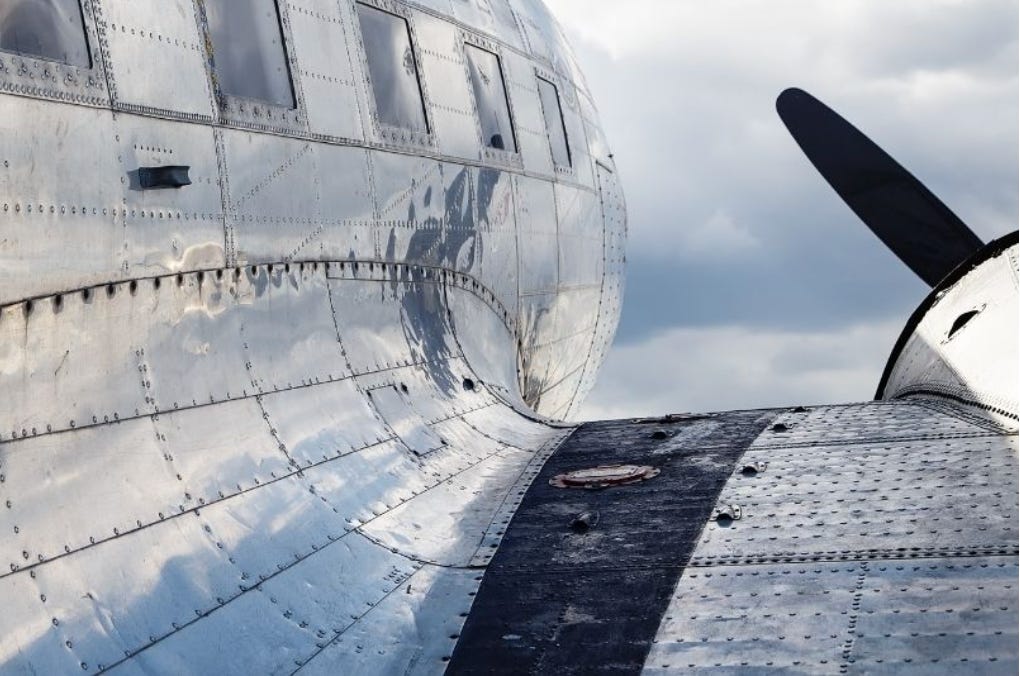
During the war, Canadian aluminum came mostly from the region north of Quebec City. Alcan’s smelter there was the largest aluminum plant in the world. At its wartime peak Alcan produced close to two-thirds of the aluminum used by the Allied forces. The plant was considered so vital to the war effort that it was ringed with anti-aircraft defences.
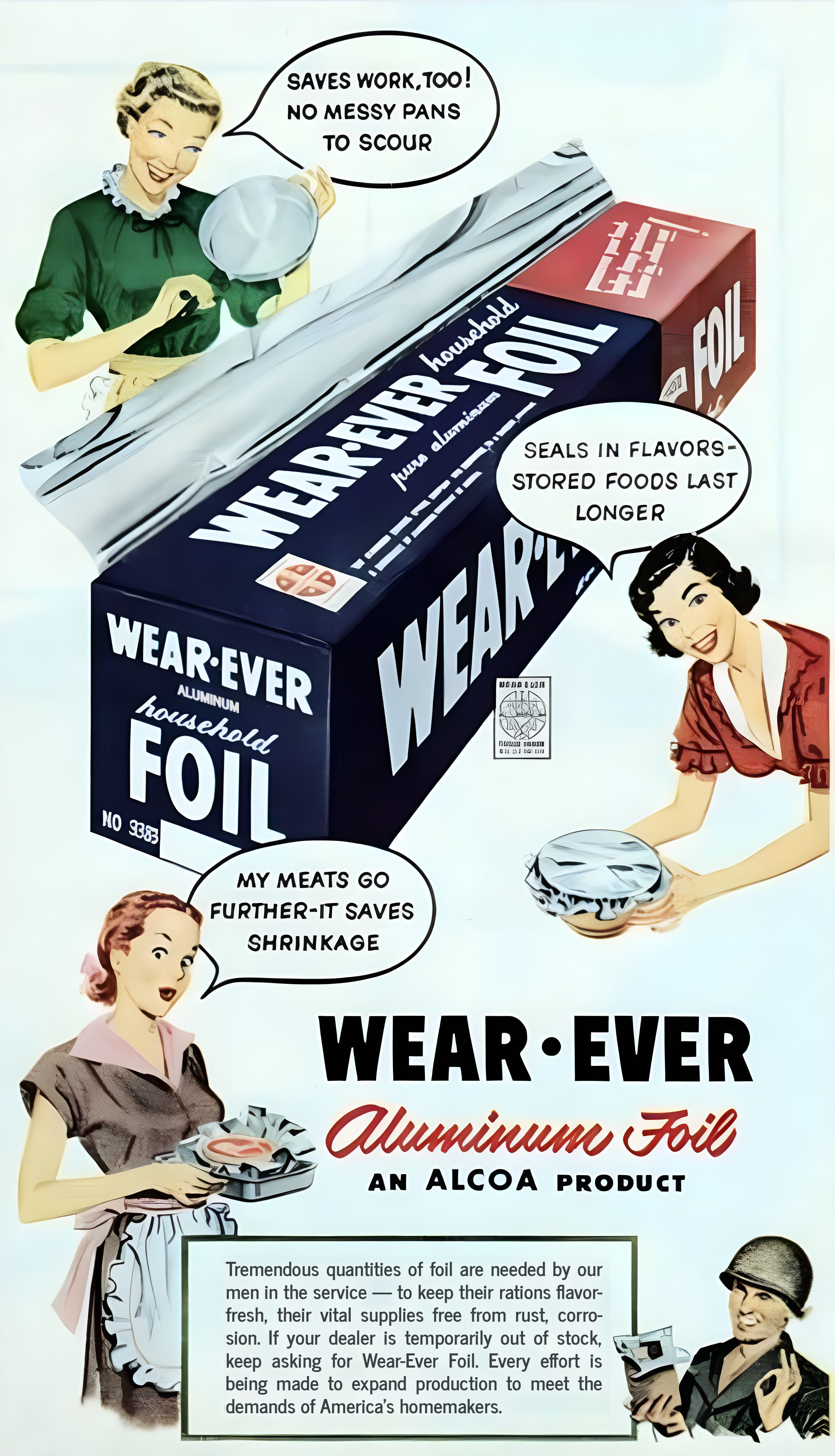
When the war ended, Canadian capacity fuelled a rapidly expanding aluminum economy, with a parade of applications in cars, cookware, window frames, lawn chairs, cans, and of course aluminum foil. It was the metal of the modern world.
In 1945, Alcan was indispensable. Even heroic.
In the years that followed, Alcan used that reputation as leverage. It moved west, in search of more hydro power, and British Columbia was eager to be the place where the company built next. In the Nechako Valley, Alcan found the river and dam site it was looking for.
On December 29, 1950, Alcan and the government of British Columbia signed an agreement that granted the company the right to create hydro power by flooding the Nechako Valley into an 880-square-kilometre hydro reservoir that is today commonly known by two names, depending on who you are speaking with: The Nechako Reservoir and Ootsa Lake.
Construction ran for three years and employed six thousand workers. It took three more years to fill. By 1957, the reservoir held over 30 billion cubic metres of water, completely flooding tens of millions of mature pine and fir trees in the process.
But more than trees flooded in Ootsa Lake. No label on a roll of foil ever mentioned it. The press did not report it. And the licence granted to Alcan by the Government of British Columbia did not disclose it.
Underwater
For at least ten thousand years, the Cheslatta Carrier Nation lived in the Nechako Valley. They hunted and fished, raised their children and buried their relatives in the land flooded by Alcan.
In 1952, they were given two weeks to leave their villages and relocate to higher ground. I have been told by Cheslatta Carrier Nation band members that those who resisted were beaten with clubs. The rest left on the promise they could return for what they could not carry. When they came back later that summer, their homes had been burned.
You can be forgiven for thinking this story sounds familiar. In 1670, the Hudson’s Bay Company was handed a commercial monopoly over nearly four million square kilometres of Indigenous land. The East India Company spent a century displacing communities in the interest of its trade monopolies, backed by its own private army. In the Congo, entire populations were driven off their land and worked to death to feed Europe’s rubber boom. In the American Southeast, the Cherokee were marched a thousand miles west so their land could be turned into cotton and gold.
The Cheslatta story is not new.
Except, I find myself thinking of them when I hear land acknowledgements. This one was read at a sports event I recently attended:
We recognize that our organization is based on Treaty 13 lands – traditional territory of the Mississaugas of the Credit. We also recognize that we are located on the traditional home of many other nations including the Anishinaabeg, Haudenosaunee, Chippewa, and Wendat Peoples. We are honoured to work with and learn from communities all across these unceded lands throughout Canada.
You feel something different while floating in an aluminum boat on Ootsa Lake. The land is gone. Villages, art, burial grounds. History. All of it deep underwater.
It is especially different to visit these flooded places with a remotely operated vehicle (ROV), as my company did in 2005 and 2006. Equipped with video cameras, our submersible ROV would fly over the tops of flooded trees, the pine cones still visible on branches, perfectly preserved for decades by cold fresh water. The ROV then dove into small enclaves where, on occasion, we could see evidence of the Cheslatta people one hundred feet underwater.
What exactly are we supposed to acknowledge floating above this land on Ootsa Lake?
Where exactly are we, when hovering in a boat one hundred feet above the traditional territory of the Cheslatta Carrier Nation?
You have a lot of time to think when working at Ootsa Lake. It’s a vast place, full of difficult questions and seemingly intractable conflicts between the past and the future we want to live in.
Twenty years ago, I had the privilege of working under a three-party contract with the Cheslatta and Alcan to help recover timber for a sawmill owned by the band. I got to see firsthand how reconciliation can take shape.
In 2012 Rio Tinto Alcan returned eleven thousand acres of traditional territory to the Cheslatta. In 2019, after a decades-long battle, the nation signed a settlement with British Columbia that included compensation and the return of land. Chief Corrina Leween noted that for sixty-seven years the Cheslatta people had worked tirelessly toward resolution of this historic wrong.
Of course, reconciliation is the last resort. The one used, in this case, to begin compensating for hypocrisy engineered into every plane, car and can of pop produced by one of our most common and important suppliers.
It is worth saying plainly: The dam is valuable. Aluminum is crucial to our way of life. We needed it to beat Hitler, after all. But needing something is not the same as handing over everything to get it. We blindly surrendered our money, and our values, to our suppliers. Our parents and grandparents did it for nearly seventy years without ever letting our money negotiate a better life for the people who paid the price.
In the end, we allowed our money to finance things we cannot explain to our own children.
The better way is the whole point of Supplierism. When you buy something valuable, it should never leave behind harms you could not explain to the people who will inherit them. That’s the first of two enduring Ootsa Lake lessons I took from my work in the region. The second is in the next post.
***
https://www.wired.com/2007/02/logs/