

On the afternoon of April 27, 1975, the Phyllis Cormack pulled out of English Bay and went around the southern tip of Vancouver Island, then headed north along the Pacific coast, toward Winter Harbour.
Built in 1941, the boat was just under eighty feet long. A dozen people were aboard. An ecologist. A doctor. A Russian and Japanese interpreter each. An electrician. A cook. An expert on inflatable boats. Two musicians. Two men from a Canadian film company. And the skipper.
Their supplies included a pair of inflatable zodiacs with outboard motors and fuel, a marine radio, a direction finder the ship's electrician had built himself out of parts, underwater speakers and hydrophones, a Moog synthesizer, a guitar, additional speakers rigged to the deck, provisions for a dozen people, cameras and film stock for a voyage of no fixed length.
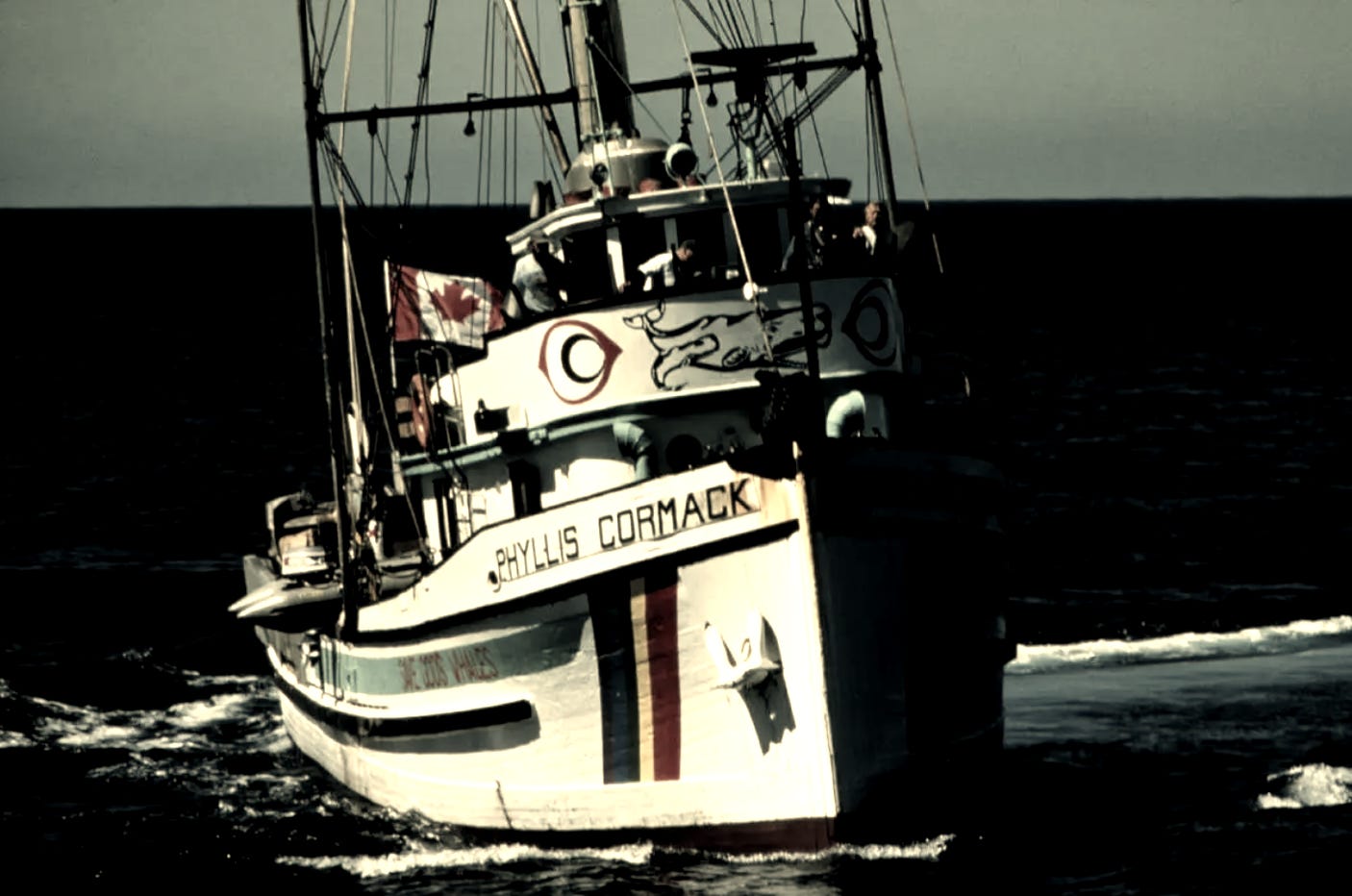
In May, the boat ventured into the North Pacific Ocean battling heavy swells, pointed toward its destination. Not a place. No, they were looking for moving targets.
Crew members sat up in the rigging with binoculars watching an empty horizon in shifts. The electrician wired one of the speakers into the galley while the remaining crew took turns at the table hour after hour, day after day, listening and hoping to hear Russian or Japanese words coming back.
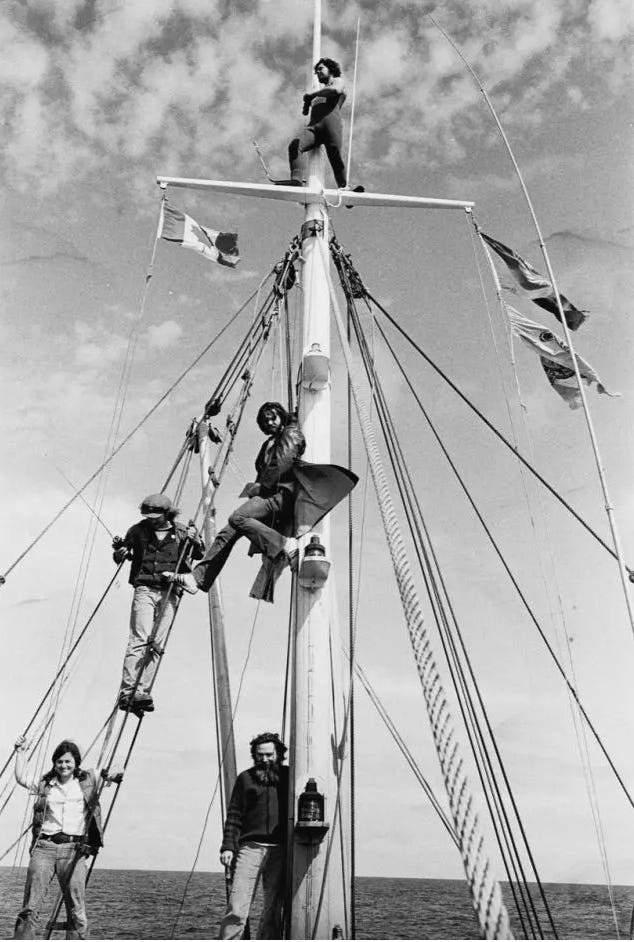
They drifted to save diesel. Then the CB radio failed. For days they could hear others, but the transmitter was now broken and no one could hear them. Nobody in Vancouver knew where they were. Nobody knew whether they were alive.
Food ran low. Water ran low.
It went like this for a full month until the evening of June 26 when they heard Russian on the galley speaker. The interpreter caught the words and coordinates. The electrician took a bearing. They turned the vessel around and headed full throttle for waters off the coast of California.
But still, it was not their destination either. In the summer of 1975, the Phyllis Cormack was in fact searching for the gap. That space between justice, compassion and the knowledge that too often we humans blindly cause harm.
This is an old problem. Among the oldest.
The gap does not close on its own. So they raged south. At midnight the skipper handed the wheel to one of the musicians with instructions to hold the vessel on its course, and then he went to bed. The moon was straight ahead, laying a yellow road across the water. The musician steered up the moonbeam instead of following the compass. But the moon moves and at four in the morning the skipper returned to find his boat ninety degrees off course.
The Russian voices could still be heard on the radio, but they went quiet around ten that morning. They had lost the signal. At noon a rainbow came up off the starboard bow. The musician, unrepentant, wandered back into the wheelhouse, took the helm from one of the two film company men, and steered for the rainbow, toward Mendocino Ridge, one hundred and eighty nautical miles from San Francisco.
Half an hour later there were ships on the horizon.
The largest was seven hundred feet long, the factory ship. The crew smelled it before they were close enough to read the ship’s name. Cranes on the main deck were tearing strips of blubber off carcasses, harpoon boats were queued behind the factory ship, waiting to unload more. Just above the waterline a six-inch pipe was pumping a steady red column of blood into the sea.
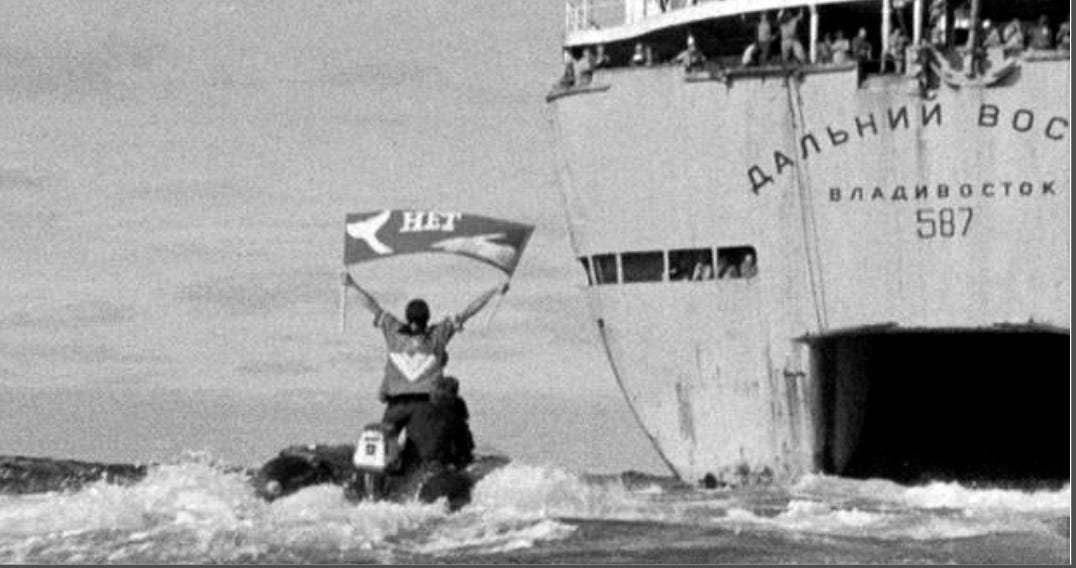
The Russian crews were perplexed. Deckhands smoking through broken teeth waved and grinned at the small boat flying a picture of the earth. Officers watched from the bridge without expression.
Then a harpoon boat left the factory ship. Its cannon pointed from the bow. A six-foot steel harpoon with an explosive charge on the tip attached to rope running back to the winch. The Phyllis Cormack followed as it began chasing a pod. They launched the zodiacs and raced after the harpoon boat. What happened over the next few minutes is best told by one of the men in the second zodiac:
We picked out a departing harpoon boat, the Vlastny, and followed it. It was soon pursuing a pod of sperm whales. Hunter leapt into a Zodiac with Watson, Korotva took Fred Easton, and I went with Patrick Moore. Hunter and Watson tried to position themselves between the harpoon boat and the frantic whales, but Watson's outboard sputtered to a stop and they were thrown aside by the bow of the killer boat. Korotva pulled up, traded passengers with Watson, and sped off with Hunter. They positioned themselves directly in front of the massive cannon, shielding the whales. When they dropped into a trough, however, the cannon fired and the harpoon flew over their heads and exploded in the side of a whale. "The harpoon cable slashed down beside us," recalls Hunter, "nearly ripping us in two." Easton turned to me with thumbs up. He had captured the entire episode on film.
— Rex Weyler, Waves of Compassion, Utne Reader.
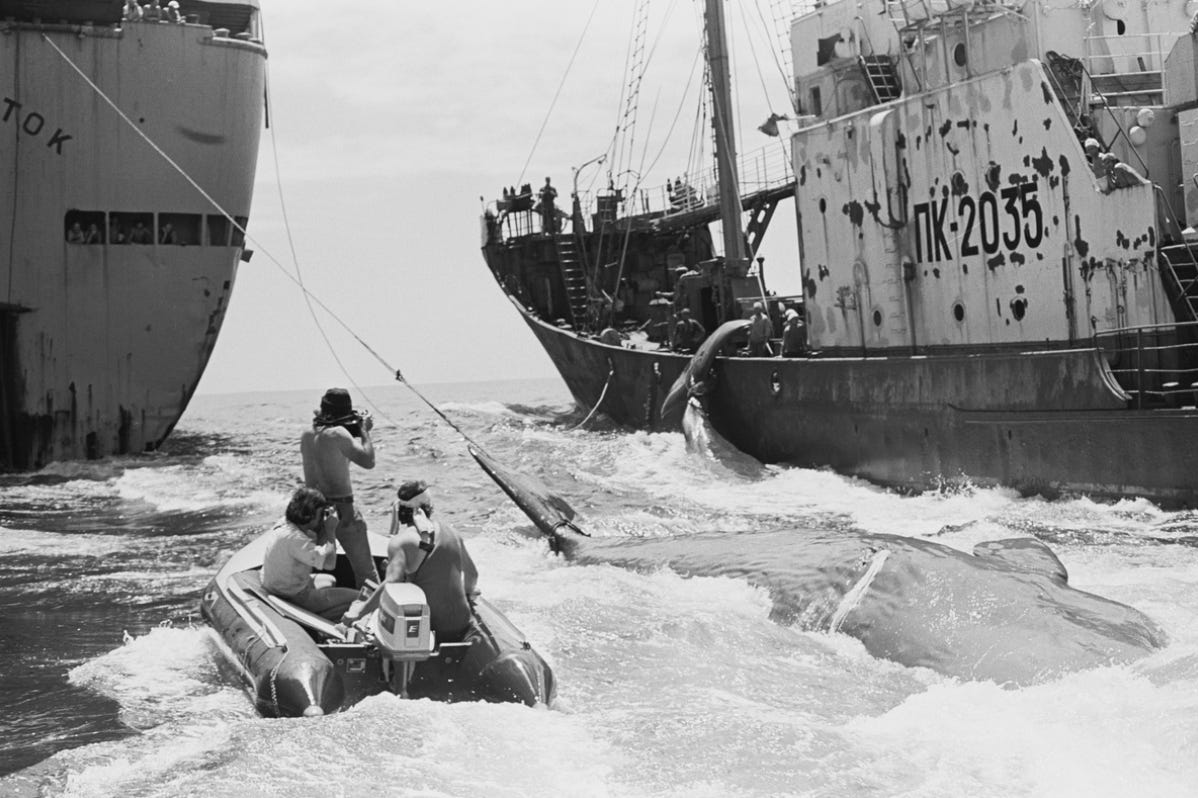
“Easton turned to me with thumbs up. He had captured the entire episode on film.”
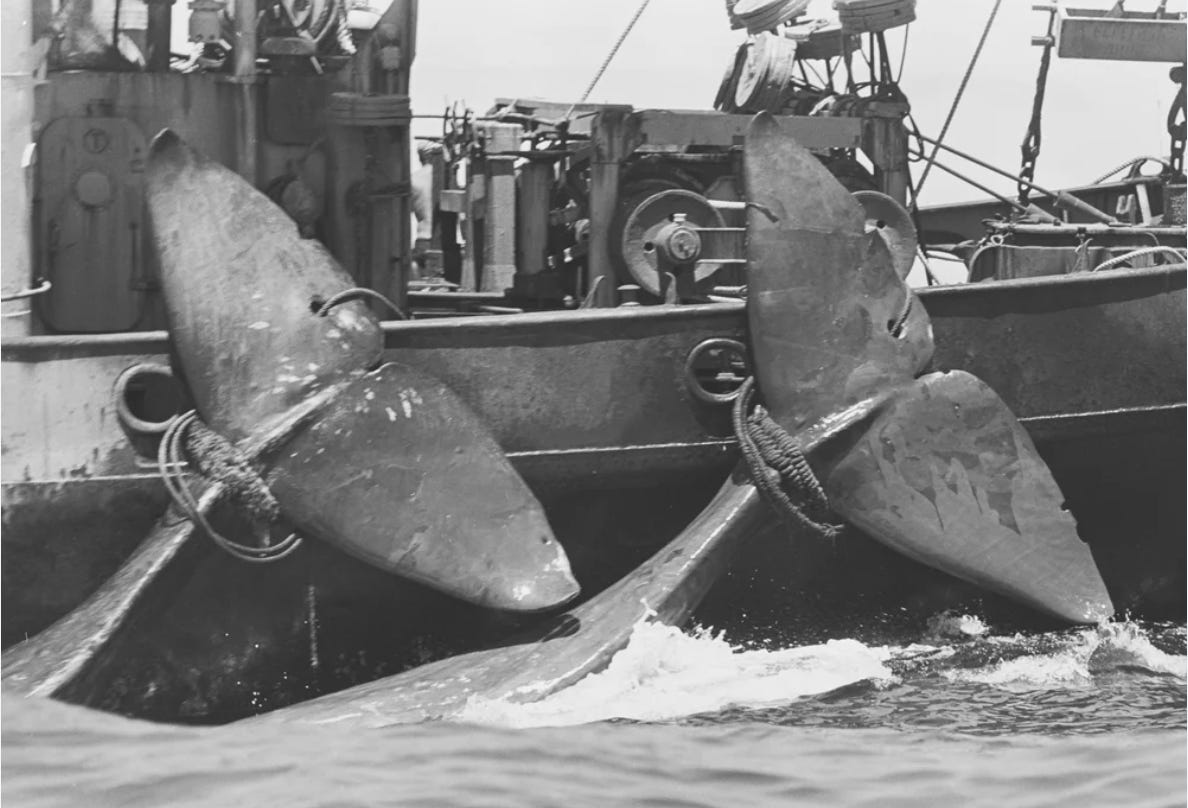
The crew gathered themselves and escaped the blood-soaked waters, then carried the film south to San Francisco. With the footage processed, they raced to send it over wire services. The images were transmitted to London, New York, Paris, Frankfurt, Tokyo, Vancouver. Whales hanging from floating slaughterhouses, raw materials for margarine, soap, face cream, lipstick, detergent, candles, perfume. Inputs to consumer supply chains that had never been graphically seen before by the public, and never fully explained.
The next morning, the images reached the front page of newspapers all around the world. They called it a “mind bomb”. When it exploded, the crew of the Phyllis Cormack introduced the world to a new weapon against injustice and corruption. The idea that cruelty could safely hide in the open ocean, or anywhere, was gone forever.