

In 2007, a web producer at Patagonia named Lisa Polley did something that changed the way I see the world. Like a lot of good ideas, it started with boredom.
At the time, one of Lisa’s jobs was to enter the coordinates that would place each of Patagonia’s supplier factories on a Google map. With her headphones on and loud music playing, Lisa set point after point on the screen.
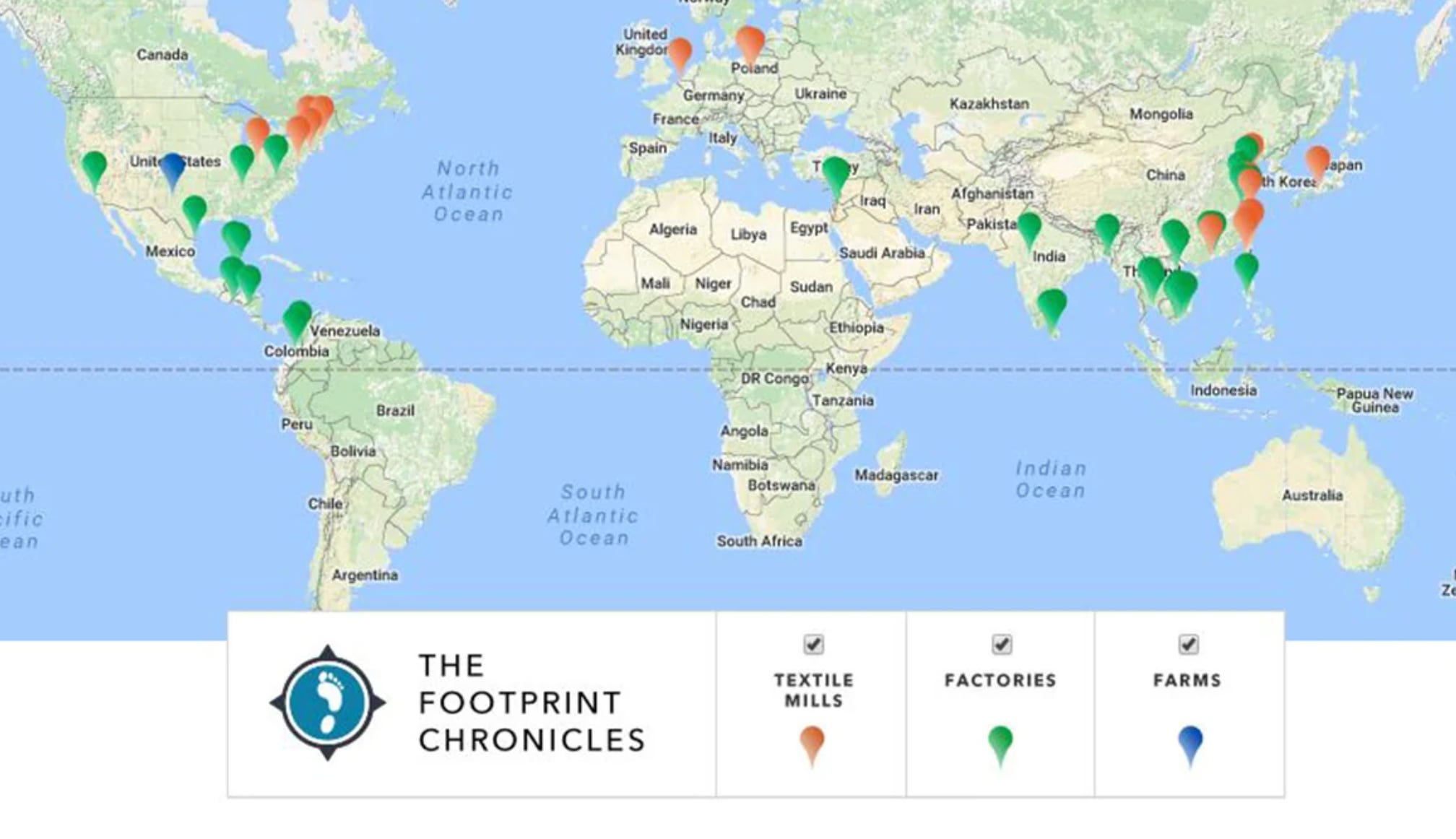
Somewhere in the tedium, the points all stopped being just data on a computer display. From boredom to a single thought, Lisa was considering a transformational idea.
Suddenly, in her mind, each pin on the screen was a real place, full of real people working every day in a real factory.
She turned off the music and stared at the map.
Until that moment, outsourced manufacturing was not a good story to tell. What happened inside a supply chain was kept out of sight. Murky, at best. Opaque by design. Where your shirt was sewn, who did the work, and under what conditions, was not something most brands would discuss, let alone publish.
Lisa kept thinking. She put the headphones back on and finished her data entry job. But the pin had turned into something she could not un-see.
Lisa later shared her thoughts in Patagonia’s newsletter about the inspiration of The Footprint Chronicles. If her spending was part of why that factory existed, then her money was also a lever she could pull. She had always thought of herself as one small person, her choices too minor to register against a global industry. Now the map was telling her something different. The factory was there because buyers like her willed it there, dollar by unthinking dollar. And what buyers can will into being, they can also change.
The realization landed hard for Lisa. I picture it like a sudden jarring chord change in a punk song. That’s what I felt when I first saw what she had done. Because it was radical. And, because Lisa loved punk music, it’s not unfair to assign this metaphor.
Thanks to Lisa Polley, The Footprint Chronicles launched in 2007 with a directive to be completely honest about where Patagonia’s products came from.
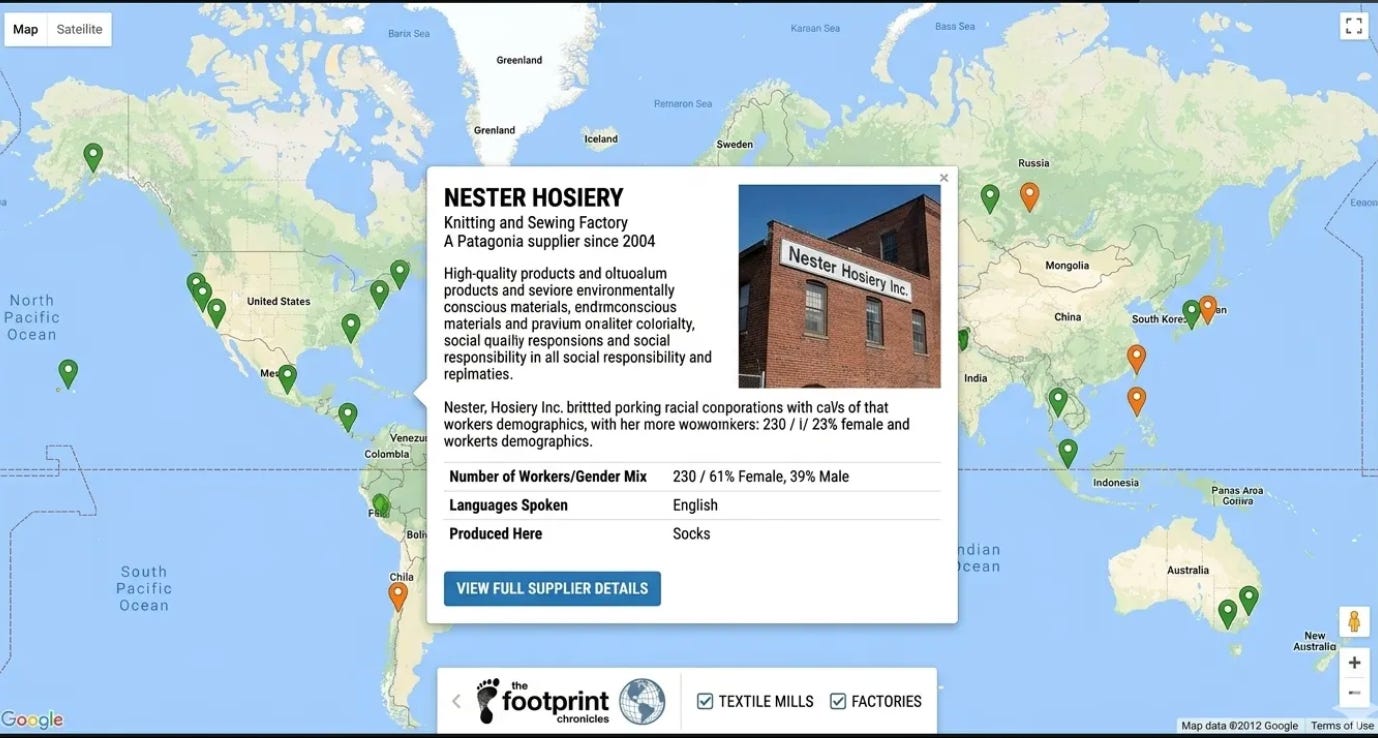
It let anyone with a browser trace a product to the specific factories and people who made it. A visitor could pick a Patagonia garment and follow it backward into the supply chain, seeing the materials, the manufacturing, and the real environmental and human costs behind that one item.
I was blown away, to say the least.
Nearly twenty years later, the reality is that enlightened suppliers like Patagonia can only do so much. Buyers need to push entire industries to change, not just reward an outlier like Patagonia, which is not a perfect company. As recently as 2023, journalists reported that Patagonia’s clothes were made in the same Sri Lankan factories as Primark and Zara, by underpaid workers. Radical change will only come when Primark and Zara also feel the power of their customers.
The Footprint Chronicles showed that we can easily see inside the factories, but it asked buyers to do the auditing themselves using the online tool. Inspiring, but not always practical. That was its flaw. Life is too busy for most people to manage their suppliers one by one.
But technology is changing how regular people can interact with their suppliers.
This week, NVIDIA CEO Jensen Huang spoke with Ezra Klein about where the world is headed. The two men had a full discussion about the existential risks of AI, then Huang said the following:
“So now, you just have to speak human (to a computer). Tell it your hopes and dreams and then it gets the work done.”
The hope, dating back to Lisa Polley’s Footprint Chronicles, is that everything we buy is audited for its ethics and aligned with our values.
The dream is for our suppliers to chase our money in exchange for a contractual obligation to make the world just, fair, and free.
Be careful what you wish for, Jensen Huang.