The Montreal Expos were my first love. I was ten. The team left for Washington DC in 2004, chasing a $600 million stadium subsidy. Thirty-two other teams have left their home city for stadium bribes since 1970, breaking millions of hearts, including mine.
Teams are paid to leave or extorted to stay. That’s the game.
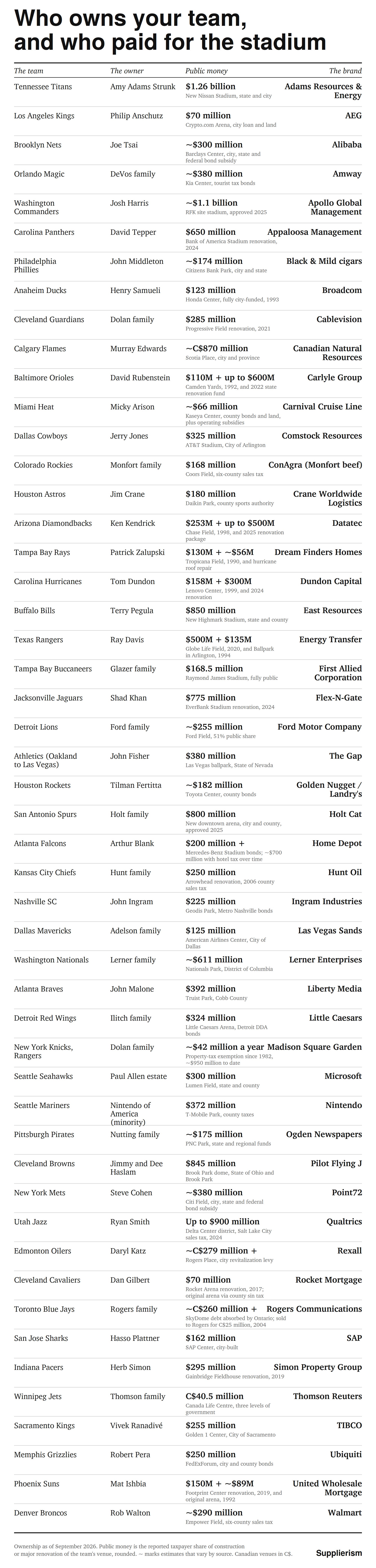
Thirty-five billion dollars of taxpayer money has been spent in North America building 119 stadiums and arenas. Economists agree that no growth or net new jobs have come from subsidizing sports teams.
The list of franchises lured away by free cash includes the Baltimore Colts, the Minnesota North Stars, the Quebec Nordiques, the Winnipeg Jets, the Houston Oilers, the Seattle SuperSonics, the St. Louis Rams, the San Diego Chargers, the Oakland Raiders and of course the Expos.
Most cities hand over taxpayer money to team owners because they fear losing their club. It’s emotional blackmail. The most historic example is told through the eyes of the man credited with saving the Texas Rangers baseball team in 1991. His name was George.
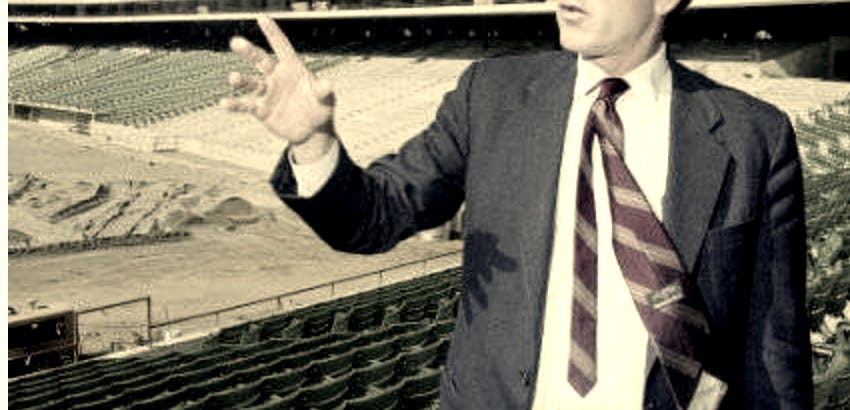
George went to Andover and Yale, the same schools his father attended. He was a cheerleader and graduated with a C average.
In 1968, George got into the Texas Air National Guard despite scoring in the bottom quarter on the pilot aptitude test. It was a significantly more comfortable place to serve his country during the Vietnam War, where 650,000 draftees were sent to fight. He became a second lieutenant without going through officer training and spent two years learning to fly a jet the Air Force was about to retire. Then there was a stretch in the National Guard in Alabama, where his commanding officer never saw him once. He skipped his flight physical and then left eight months early, released from the remainder of his military obligations to go to Harvard Business School, equipped with that C average.
Lucky George.
In 1977, he decided to go into the oil business. He was set up with a company, Arbusto Energy, and a few million dollars. This time George wasn’t so lucky. The company never made any money and folded nine years later.
He loved sports and wanted to be the commissioner of baseball, but that job had been offered to someone else more qualified.
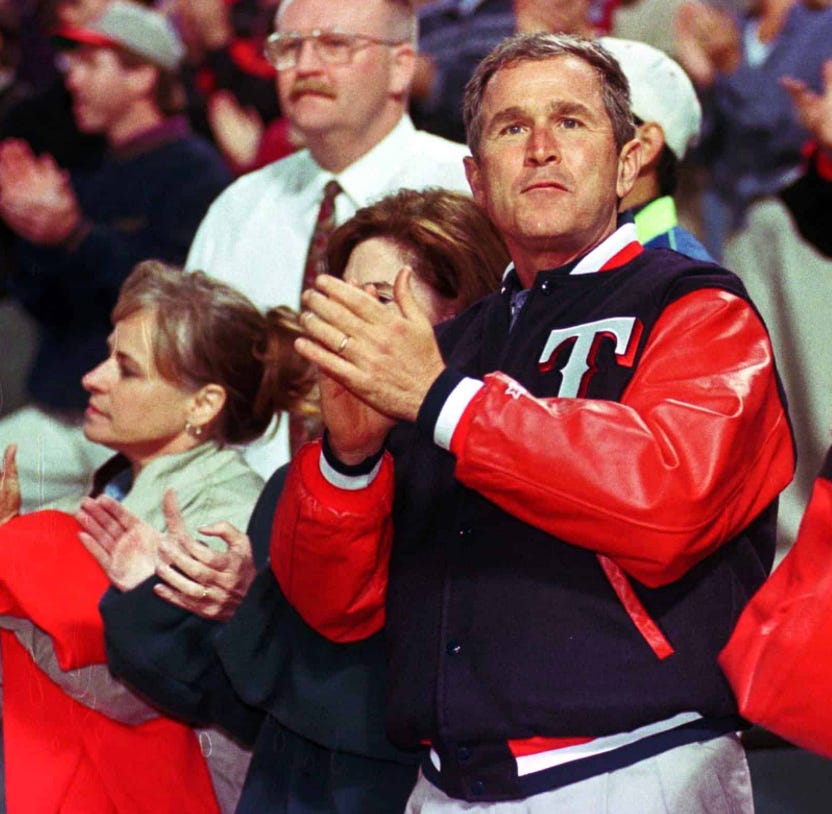
He stumbled on some more luck when, in 1989, the owners of the Texas Rangers asked if he’d like to join their team. All he needed was $600,000 (borrowing that part was easy) and a willingness to extort stadium money from the city of Arlington, where the Rangers play their home games.
Texas was climbing out of the 1980s oil bust. Arlington was the largest city in America with no public transit system. Its voters had turned down a 0.5% sales tax for buses.
But the Rangers wanted a new stadium. For free. And if they didn’t get it, then the team threatened to pack up and leave.
George turned out to be good at this job. A Reagan conservative by brand, he helped the Rangers secure a sales tax, charged mostly to working-class citizens, that raised $135 million for the new ballpark. He and the Rangers also picked out the land they wanted. When the people who owned it refused to sell, the land was expropriated so the ballpark could be built there anyway.
George had “saved” the Rangers.
While he had not done much else, that was enough to make him a candidate for Governor of Texas. That and his last name.
George won and was elected governor in 1994.
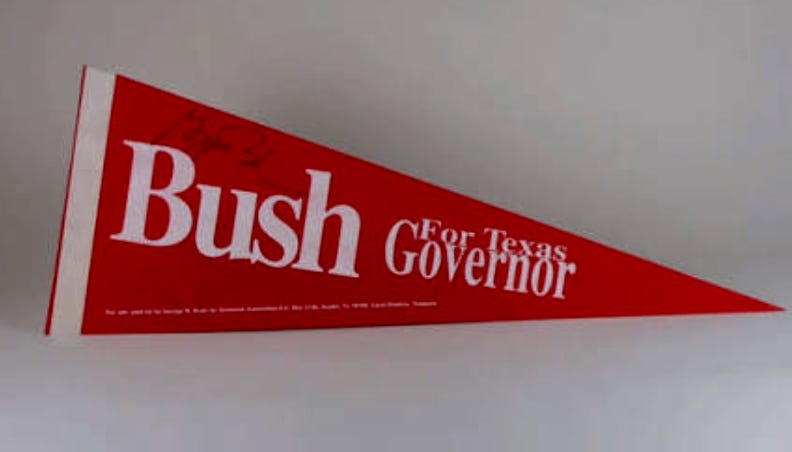
In 1998, the Rangers sold for $250 million, three times what the group had paid. The stadium and the land around it were most of the reason. George’s $600,000 — and his bonuses — suddenly became $14.9 million. He was now himself rich. Not just the son of a rich man. He was re-elected governor the same year and soon after announced his decision to run for President.
In 2000, he was elected the 43rd president of the United States and, as commander in chief, presided over the country on September 11, 2001.
***
The teams we love are mostly owned by our suppliers, who blackmail fans while taking taxpayer money to subsidize valuations and salaries. Here are fifty of them.