

In the early 1980s, the world was consumed by economic debates about capitalism vs socialism, free markets vs central planning, private ownership vs collective ownership. These were questions that defined global politics and dinner table conversations. Ronald Reagan and Margaret Thatcher were privatizing, deregulating and breaking unions. The Soviet Union was the rival socialist superpower. The Cold War still simmered dangerously. Whole nations were organized around which side you were on, and nobody knew how it would end.
At the very same time, a new product was promising to change everything: the personal computer. These machines started out the size of furniture, heavy and beige. A roster of computer brands was launched. Most of them have since faded into Gen X nostalgia: Commodore, Tandy, Atari, Wang, Kaypro. Apple was there too. A Super Bowl ad that tapped into the decade’s Orwellian mood introduced us to something called the Macintosh.
But by far the biggest supplier was IBM. In 1984 it controlled 63% of the market.
That same year, a nineteen-year-old at the University of Texas was tinkering with his personal computer. He was trying to make it faster and more powerful. While taking his computer apart and upgrading it, he noticed that a three-thousand-dollar IBM PC contained just six hundred dollars in parts. The other twenty-four hundred dollars was the extra costs of an inefficient supply chain. IBM was spending piles of money manufacturing and warehousing inventory based on computer specs they guessed their customers wanted.
The kid in Texas had an idea. Instead of building a computer and hunting for a buyer, what if he found the buyer first, took their order and their payment, and only then assembled the exact machine the buyer had specified.
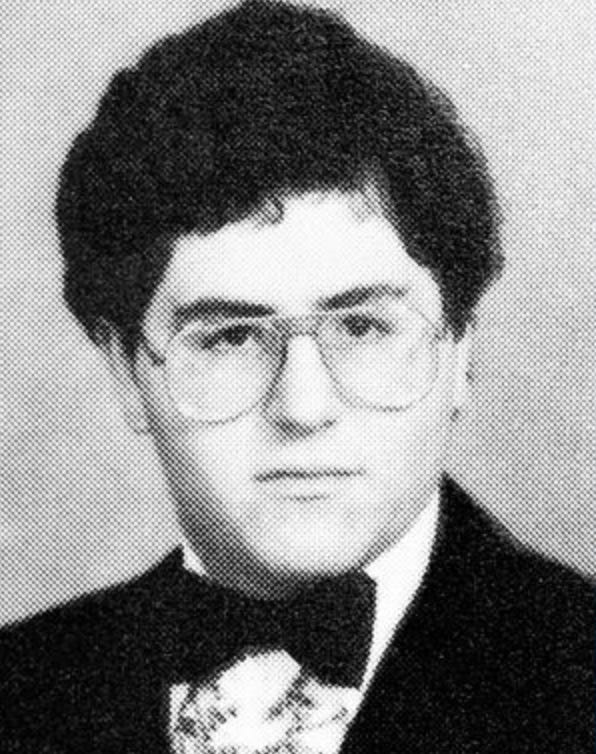
Later that year, word had spread that you could buy a cheaper, better computer. Soon, he had customers calling every day. He hired someone to answer calls and take the orders. Then he hired a few more people. There was no store, no dealer, no salesperson in between.
When the phone rang, the representative walked the buyer through their choices: how much memory, how big a drive, which processor, which monitor. The rep keyed in the configuration, quoted a price for that exact build, and took payment on the spot. Only then did the computer get built and shipped to the buyer’s door.
The business eventually moved online. The phone rep became a web page. The interface got easier, but the process never changed. The buyer described the product specs, paid up front, and then the product was built to order.
This basic innovation was transformational. From his dorm room at the University of Texas, a nineteen-year-old with no manufacturing plant or facilities took on IBM, the largest technology company on earth, and clobbered them. The kid’s name was Michael Dell. His company today employs over 100,000 people with revenues of over $100 billion a year.
Supply chains that are accountable to the buyer
Dell is not just a classic business-school case study. It is also a moment that upended old economic assumptions. While 1980s Cold War debates raged, Dell proved that ownership of property, machines and factories is not the only source of power in the economy. In the model he used to beat IBM, empowerment came from the buyer. Specifically:
He gave the buyer the ability to write the specifications for the product.
He offered so much value that the buyer was willing to sign a contract with payment terms.
No factories needed.
The wrong debate
Dell helped shine a light on the fact that buyers can set their own specifications. When they do, supply chains become more accountable and less prone to inefficiency (and corruption).
Today, most supply chains are controlled by large corporations, governments, or some combination of both. They do it by seizing chokepoints for energy, food, technology, finance, housing and medicine, among others. This economic tactic is a proven way to accumulate wealth and power, and it too often leads to higher prices for consumers, poorer product quality and more corruption.
Since the Cold War, we have learned that socialism and capitalism are equally susceptible to these self-serving chokepoints. Neither system has a clean record and neither has proven to be universally good at solving major social and economic problems without borrowing heavily from the other. In reality, nobody actually lives in a textbook version of either capitalism or socialism. But we all live in a single global economy that shares the same accountability crisis. Governments and corporations get rich off our money, while failing to solve the problems we care about most. So when we argue about which political system is better, we are mostly arguing about cartoons, pure ideologies that exist nowhere.
Meanwhile the most important question goes unasked in every country and in every political system:
Who are your suppliers accountable to?
An unelected government official (too often taking bribes or being coerced).
An elected official (doing the bidding of their donors).
A corporation (seeking maximum profit without regard to your future).
Or you.
One footnote: Michael Dell became pretty classically “super rich.” Like Elon Musk, Jeff Bezos, Mark Zuckerberg and others, he started young and built something hundreds of millions chose to use. Part of the Supplierism journey is working out a puzzle that the socialism vs capitalism debate misses: how do we create incentives so that brilliant young people keep building life-changing things, while limiting their ability to become obscenely rich, the kind of rich that breaks democracies? We actually have a sensible proposal, and it may surprise you. (More on that in a later post.)