

In 1916 Clarence Saunders opened the world's first self-service store. The Memphis grocer let people wander the aisles, choose their own goods, and load them into baskets themselves, an idea so novel he patented it. He called the store the Piggly Wiggly.
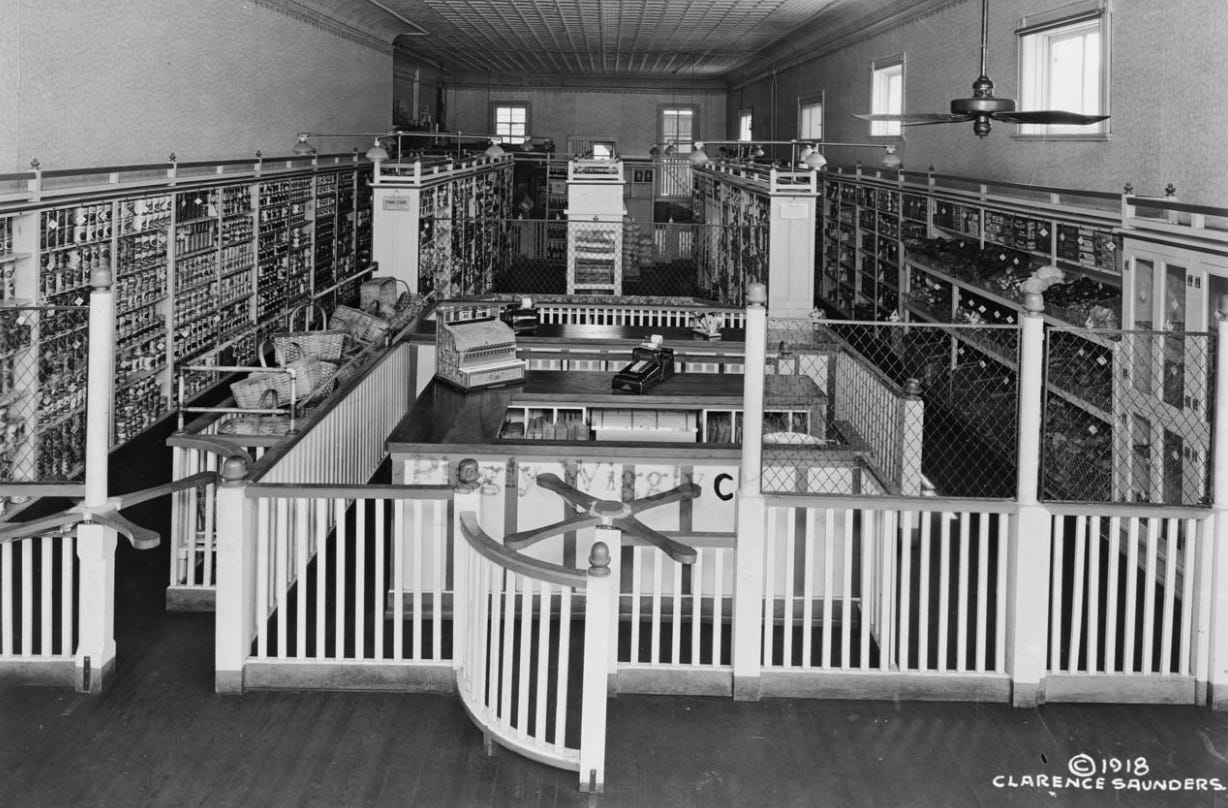
In 1947, Frank Urich opened a gas station in Los Angeles with a sign that read: Save 5¢, Serve Yourself.

In 1967 a Barclays branch in London introduced a machine that turned customers into bank tellers.

In 1983, a dentist in Michigan placed the first online trade himself, over a home computer network. The company behind it became ETrade.
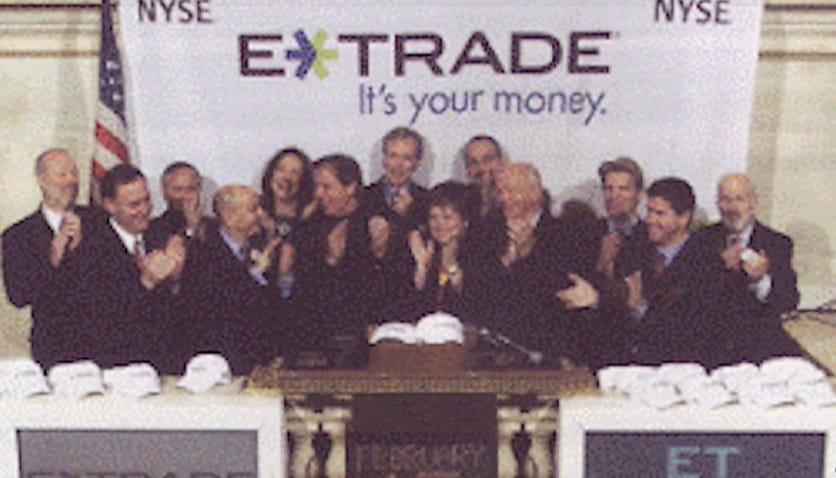
Soon, their ads joked that anyone could be a stock broker.

In 1996 Travelocity introduced travellers to a self-service airline reservation system. We became our own travel agents.
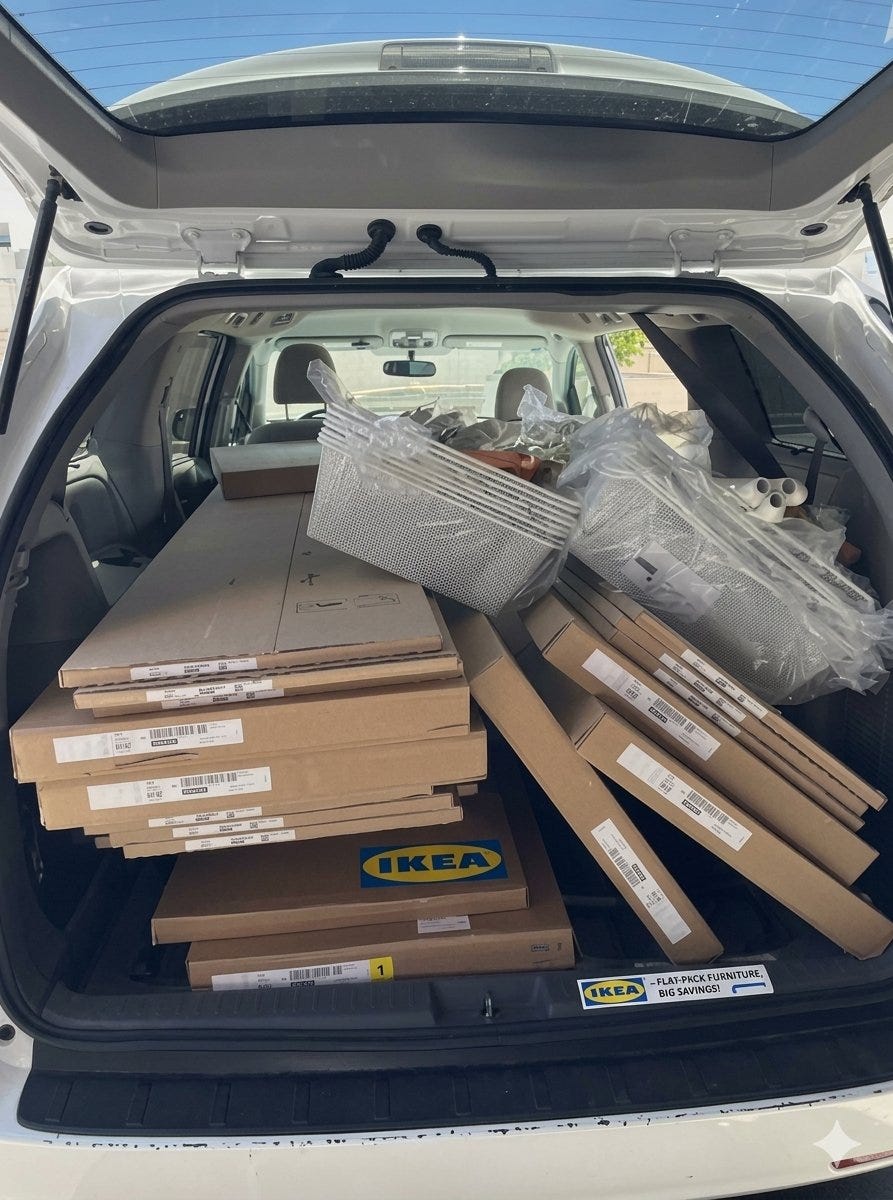
IKEA took self-service to another level. Remarkably, we do three jobs at once for this supplier: the warehouse picking, the shipping, and the factory's final assembly.
Self-Service 1.0
Over the last hundred years or so, our suppliers radically changed life using the same playbook over and over again: they outsourced jobs to us (the buyer) in exchange for better, faster, and cheaper stuff. Call it Self-Service 1.0.
It has made regular people mind-bogglingly productive. On top of the jobs already mentioned, we now write and instantly send volumes of correspondence every day, work that once required a typist and took weeks to reach its destination. We take, edit, and publish limitless photographs that once needed a studio and a darkroom. We file our own taxes, curate our own music collections, design our own invitations, teach ourselves languages. We can research medical, legal, and financial questions while lounging on the sofa, answers that once cost thousands of dollars to acquire and were the exclusive domain of wealthy people. We produce more words, images, and decisions in a week than our grandparents produced in a year.
Self-Service 2.0
In the global economy, the one that revolves around your attention and money, you are not a small, solitary individual. You are, in fact, a productivity phenomenon, with the capabilities of a corporation from just a few decades ago.
The problem is that we are good at production and bad at managing our broader interests, like privacy and security. We get ripped off easily and leave way too much leverage on the table. That's by design. Our suppliers have happily outsourced jobs to us under the banner of self-service, as long as it makes them more money and increases their own influence.
But self-service is not a genie that our suppliers can put back in the bottle. The next generation is ready to do the jobs our suppliers don't want us to take over. Namely, managing them. Today, these technologies can equip you with a virtual team: researchers working around the clock, procurement agents qualifying every supplier and hunting down the best deal on everything you buy, paralegals drafting agreements and combing every detail of every contract, negotiators who know exactly how far the best suppliers will go to improve your life in exchange for your money, and a strategic consultant planning how to get from where you are today to where you want to be tomorrow.
Self-service banking, stock trading, and travel booking once seemed like science fiction. Now we take them for granted. Managing your suppliers, and the terms of every deal you make with them, is simply the next thing we'll do for ourselves.
***
Image credits