

Meta just settled the largest child-harm case in the history of the internet for $17.1 billion. For their pain and suffering, kids get $0.
There are important changes coming to Meta, thanks to the lawsuit. But the settlement is backward thinking.
First, the governments that failed to protect kids get all the money.
Second, lawsuits are what you do after harm is caused. We need a system that protects kids before they get hurt.
Can we change the system? Yes. Here’s how.
In June, I wrote:
…the company creating the risks that may harm you and your family also gets to decide whether those risks stay invisible to investors, insurers, banks, regulators, and you.
Frances Haugen blew the whistle on Meta in 2021 saying the company knew it was harming kids. Even so, Meta’s financial disclosures assigned no value to the risk of harming children. Meanwhile, they made money by writing user contracts that legally favoured themselves and hid liabilities. This is so obviously wrong and bad for society.
And it’s fixable.
The first move is to use a very old economic principle:
Buyers with leverage set the terms and conditions with the supplier. Not the other way around.
The bigger the buyer, the more leverage they have. That’s the natural order of commerce dating back hundreds of years. Suppliers setting their own preferential terms, at the expense of the buyer, is a new digital phenomenon that betrays basic economic principles and traditional marketplaces.
Young people have enormous unused financial leverage. Children are roughly 20% of the world’s population and account for something close to 10% of global consumer spending. They are a $7.2 trillion economy with a common interest in not being harmed.
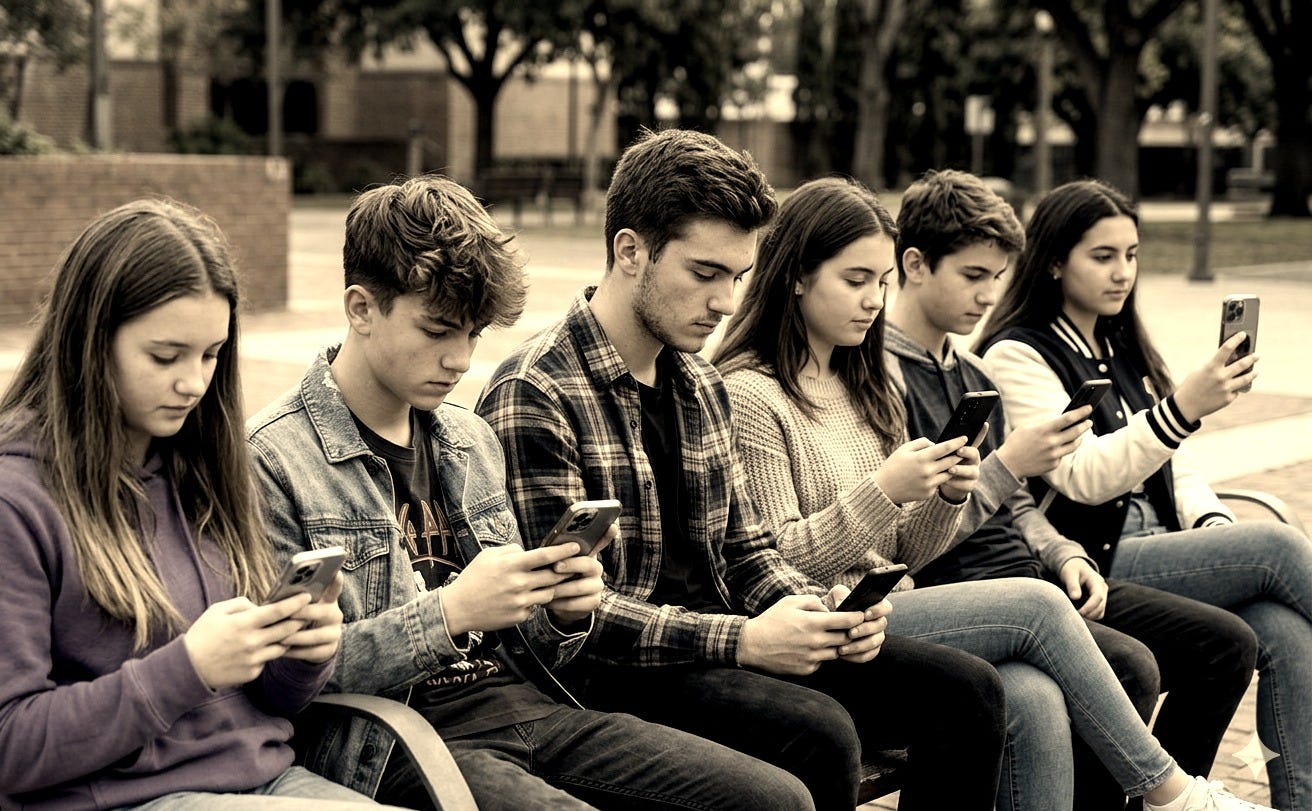
When a kid signs up for social media, their terms and conditions need to define the remedy for causing harm. That’s the way the problem starts to get solved.
Here’s a simple example, with a more legalistic version pasted at the end of the post. Both were created using Supplierism’s free terms generator:
What you can't do to me. You can’t build things designed to keep me hooked. You can’t ignore me when I report bullying. You can’t hide your own research showing your app hurts people my age.
If you break any of these rules then you owe me $10,000.
The key is to set the cost. I chose a $10,000 remedy because it is roughly the cost of therapy for a year and a half. It could easily be much higher.
I also wanted a concrete number to workshop the solution and $10,000 works fine.
When we enter into well-crafted legal agreements with our suppliers, they commit to be honest in exchange for our money or attention. So, when Frances Haugen blew the whistle on Meta, a contingent liability should have been applied to their balance sheet for each child they were potentially harming. That comes to $250 billion, or $10,000 x 25 million kids. (Harvard researchers counted 16.7 million American under-18s on Instagram and 9.9 million on Facebook. For simplicity, I counted each as one user and rounded down to 25 million.)
What happens when the auditor puts a $250 billion contingent liability on the books? The stock crashes and executive bonuses are docked. A 25% drop in Meta’s stock is about $154 a share. Mark Zuckerberg owns 330 million shares. That would cost him $51 billion.
Supplierism always asks two questions:
Who owns the cost of a harm?
And what value was assigned to it?
The cost of depression or low self-esteem for a child, and the true value of their attention and time, are virtually impossible to price. But, to change the system, we have to be good at playing their game. So, your terms generator should always put a value on the cost of harm so that it can be transferred to our suppliers, where it belongs, as a contingent liability.
A $250 billion contingent liability is a deterrent pointed at the central nervous system of a corporation. It gives executives a reason to fix the problem before a child gets hurt, not years after. It reprograms corporations to protect kids and not treat harm as an affordable cost.
Settling for $17.1 billion lets Meta off the hook while a contingent liability for $250 billion would have forced them to change long before a child was hurt or a lawsuit filed.
***
Here’s an example of the actual clause that all kids and their families should create, and force suppliers to accept, before a child opens a social media account of any kind.
Clause 7. Harm to the child user.
7.1 Prohibited conduct. The supplier shall not, in respect of a minor account: (a) deploy any recommendation, notification, autoplay, streak, or reward system that the supplier knows, or from its own testing has reason to know, increases compulsive or extended use by minors; (b) fail to remove content reported by the buyer as bullying, harassment, or targeted abuse of the child within seventy-two hours of a report; or (c) withhold from the buyer any internal or commissioned research indicating that the supplier’s products contribute to anxiety, depression, disordered eating, self-harm, or compulsive use among minors.
7.2 Liquidated damages. For each breach of clause 7.1, the supplier shall pay the buyer $10,000 per affected child. Payment is due to the household and shall not be directed to any fund, foundation, charity, or third party.
7.3 No proof of injury required. The buyer is not required to demonstrate a diagnosed condition, medical record, or specific injury to the child in order to claim under clause 7.2. Breach of clause 7.1 is itself the trigger.
7.4 Genuine pre-estimate. The parties agree that $10,000 is a conservative pre-estimate of the buyer’s likely costs, including counselling, assessment, and lost caregiver time, and is not a penalty. Two years of weekly adolescent therapy in the United States commonly exceeds $15,600.