

Think of everything you buy, probably without noticing, from companies in and around Seattle: Amazon, Microsoft, Starbucks, Costco, Expedia, Nordstrom, Zillow, Eddy Bauer. It’s hard to argue with the premise that Seattle creates a lot of globally successful suppliers. Or from Finland, a country of just 5.7 million people: Marimekko, Nokia, Lunawood, Suunto, Supercell. How about Italy: Barilla, Lavazza, Campari, Ferrero, Ferrari, Fiat, Pirelli, Gucci, Prada, Armani.
Now try to remember the last time you bought something that came from Russia. An actual product, made in Russia, that you picked off a shelf. For most of us the honest answer is a long time ago, if ever. The scale of Russian’s supplier irrelevance is almost funny: in 2022, Saskatchewan sold twice as much to the United States as all of Russia did. Today, with sanctions in place, Saskatchewan sells closer to ten times as much. A single prairie province of 1.3 million people out-supplies a global power of 140 million.
But that dynamic was twisted, for a while, by two sporting events: the 2014 Winter Olympics in Sochi and the 2018 FIFA World Cup.
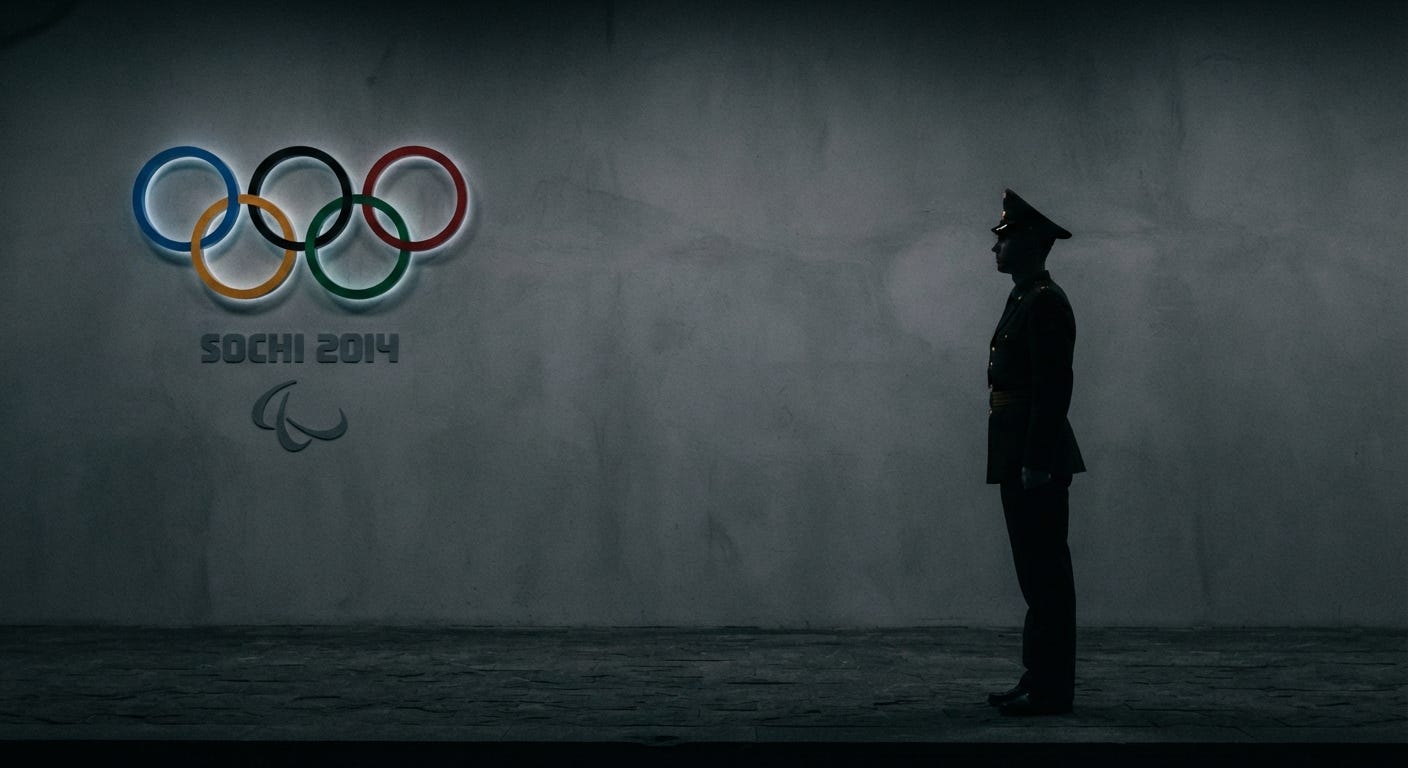
Those events did not make Russia a better supplier of anything. But, for a few weeks Russia was not just a petro-state run by a former intelligence officer. It was the global host, draped in the logos of Coca-Cola, Visa, Samsung, McDonald’s and Budweiser, beamed into living rooms everywhere as modern, confident and welcome.
Here is a part worth paying attention to. Between 2010 and 2018, while we paid at the pump, at the supermarket, at the counter where we tapped our card, a steady river of that money ran through the International Olympic Committee and FIFA and into the Russian state.
We became Russia’s financier. Not because it won our business by making something we needed, but because our money was quietly routed there, through companies we do buy from.
Four days after the Sochi closing ceremony, before the flame had even gone cold, Russian forces moved into Crimea. The 2018 World Cup, already awarded, was not taken away. Three and half years later came the full-scale invasion of Ukraine, the largest land war in Europe since 1945.
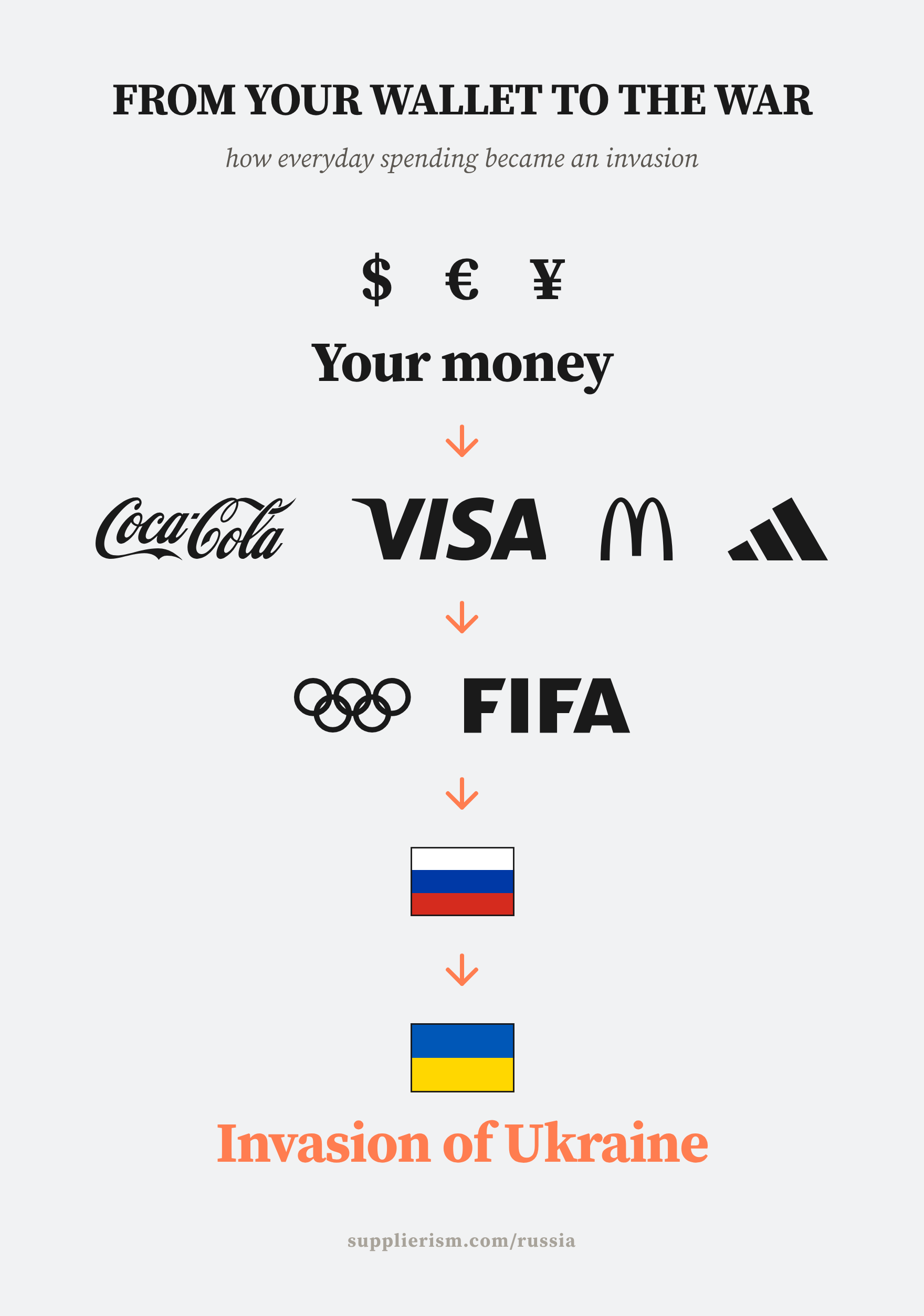
→ See the full money trail: supplierism.com/russia